

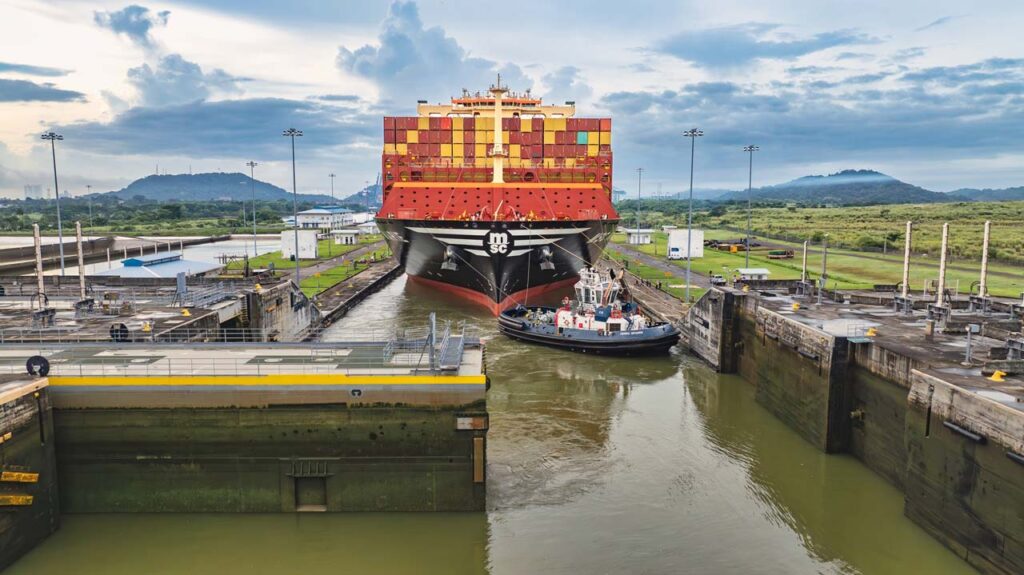
The Panama Canal is commemorating the 10th anniversary of its expansion, a milestone that marked a turning point in both Panama’s history and the evolution of global trade. According to the Panama Canal Authority, the project opened a new era for international logistics and significantly strengthened the Canal’s role as a strategic platform for world commerce.
Ten years have passed since June 26, 2016, when the COSCO Shipping Panama officially inaugurated the new Agua Clara and Cocolí locks, launching a new chapter for the interoceanic route. The expansion was the largest infrastructure project undertaken since the original Canal opened in 1914, creating tangible benefits for both Panama and the global shipping industry.
The project increased the Canal’s capacity, boosted national revenues, and reinforced Panama’s competitiveness by opening new opportunities for economic growth, investment, and employment. During the first eight months of fiscal year 2026—from October 2025 through May 2026—the Canal recorded 8,593 transits, of which 27.7%, or 2,385 transits, were carried out by Neopanamax vessels. By May 2026, the expanded locks had already surpassed 31,000 transits since their inauguration, and the expanded route now accounts for more than 50% of the Canal’s total revenue.
The Canal also highlighted several milestones that have defined the decade. On June 27, 2016, the Lycaste Peace became the first LPG vessel to transit the expanded route, followed on July 25, 2016, by the Maran Gas Apollonia, the first LNG vessel to pass through the Canal. More recently, on August 30, 2024, the MSC MARIE set a capacity record with 366 meters in length and the ability to carry 17,640 TEUs, demonstrating the infrastructure’s importance for large Neopanamax ships. On March 26, 2026, the Canal also welcomed Virgin Voyages for the first time with the transit of the Brilliant Lady, reflecting the continued interest of the cruise industry in the Panama route.
Looking ahead, the Canal Authority said the first decade of expansion has also underscored the importance of resilience in the face of climate challenges, particularly those experienced in 2023 and 2024. In that context, responsible water management has become a national priority, and long-term initiatives such as the Río Indio Lake project are now part of a broader water strategy designed to secure both Canal operations and water supply for the population.
The Panama Canal described the expansion as more than a landmark engineering project. It also stands as a symbol of Panama’s capacity to innovate, adapt, and lead in global trade. During the commemoration, Canal Administrator Ricaurte Vásquez Morales and Deputy Administrator Ilya Espino de Marotta presented commemorative plaques to five Neopanamax vessels transiting the route, recognizing their contribution to the first decade of operations of the expanded Canal and highlighting the close partnership between the Canal and the international maritime industry.