

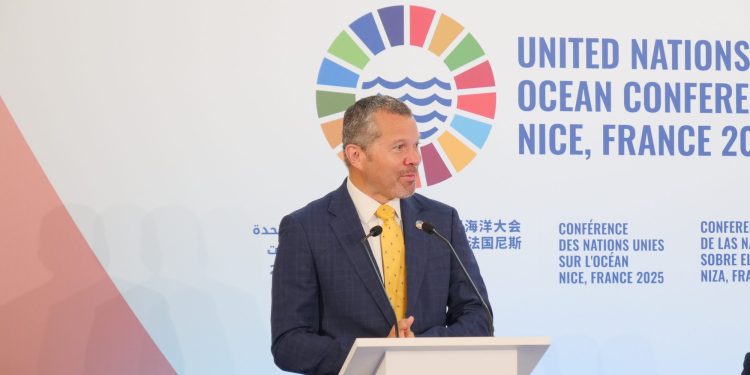
The International Maritime Organization (IMO) has called on governments and industry stakeholders to move from commitments to concrete action following the United Nations Ocean Conference, held from June 9 to 13 in Nice, France. IMO Secretary-General Arsenio Dominguez welcomed the pledges made during the conference, while stressing that real progress will depend on practical implementation, stronger cooperation, and measurable results.
According to the IMO, the conference highlighted the maritime sector’s growing role in addressing major ocean-related challenges, including marine plastic pollution, biofouling and invasive aquatic species, underwater radiated noise, and the decarbonization of shipping. Dominguez noted that the IMO has decades of experience in developing regulatory measures to protect the marine environment and can continue playing a central role in advancing this agenda.
One of the key developments during the conference was the launch of the High Ambition Coalition for a Quiet Ocean, a group of 37 countries led by Canada and Panama focused on reducing underwater noise pollution. The IMO also highlighted its revised 2023 Guidelines for the reduction of underwater radiated noise, along with the 2024 IMO Action Plan on Underwater Radiated Noise, which supports research, target-setting, and knowledge-sharing among member states.
The organization further underscored its work on biofouling management, including the development of a new global legally binding regulatory framework that could be adopted in 2027, as well as ongoing technical assistance programs designed to support innovation and best practices across the industry.
On the issue of marine plastic pollution, the IMO pointed to the role of MARPOL Annex V, which prohibits the discharge of most garbage from ships, including plastics, into the sea. It also highlighted its 2025 Action Plan to Address Marine Plastic Litter from Ships and announced a new Global Industry Alliance aimed at supporting stronger action against marine plastic pollution.
Looking ahead, the IMO urged the international community to intensify efforts and deliver meaningful progress before the next UN Ocean Conference in 2028, which will be hosted by Chile and the Republic of Korea. The message from the organization was clear: commitments matter, but lasting impact will depend on turning them into effective action across the global maritime sector.