

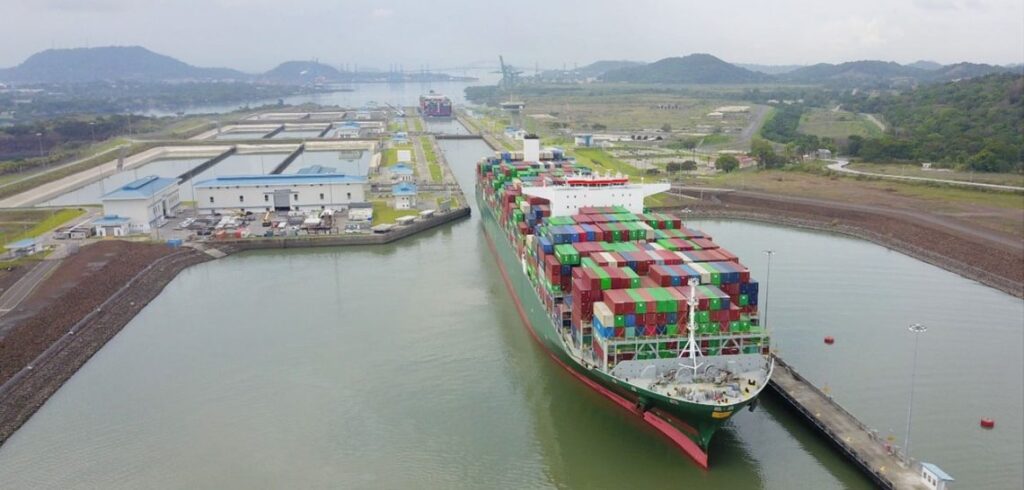
The Panama Canal has reinforced its forward-looking water management strategy to address the potential impact of El Niño while maintaining stable operations across one of the world’s most important maritime trade routes. According to the Panama Canal Authority, the institution has been closely monitoring climate conditions since late 2025, which is why Gatún Lake has been kept at historically high levels as part of a precautionary approach.
The Canal said that, in response to the possible development of an El Niño event during the second half of 2026, it began implementing water-saving measures at the locks in late 2025 and took advantage of the relatively dry season in 2026 — which was among the wettest recorded since 1950 — to strengthen reserves in Gatún and Alhajuela Lakes. The Authority added that it continues to monitor the situation with scientific rigor and operational prudence, updating lake-level projections every week.
Current data, according to the ACP, does not indicate a need for transit restrictions through December 31, 2026, and the Canal is continuing to operate with 38 daily transits. At the same time, officials noted that the most significant effects of moderate or strong El Niño events often become more evident in the following year, which is why operational projections for 2027 are already being developed.
The Canal emphasized that water is not only essential for vessel operations, but also for the well-being of communities and for the supply of more than 50% of Panama’s population. In that context, it reiterated its role as a key steward of responsible and sustainable water management, especially at a time of increasing climate variability.
As part of its preventive measures, the Panama Canal has activated operational practices developed through previous drought experience. These include simultaneous lockages for certain vessels, the use of water-saving basins at the Neopanamax locks during directional changes, the use of interior gates to reduce water consumption depending on vessel size, and the temporary suspension of hydroelectric generation at Gatún in order to prioritize water storage for human consumption and Canal operations.
Looking beyond short-term measures, the Canal stressed that long-term water security will depend on structural solutions, particularly the Río Indio Project, which is intended to expand storage capacity, strengthen resilience to more frequent and intense droughts, and help secure both reliable Canal operations and drinking water supply for Panama. Through this approach, the Canal reaffirmed its commitment to sustainability, operational resilience, and the responsible management of water as a strategic resource for both the country and global trade.