

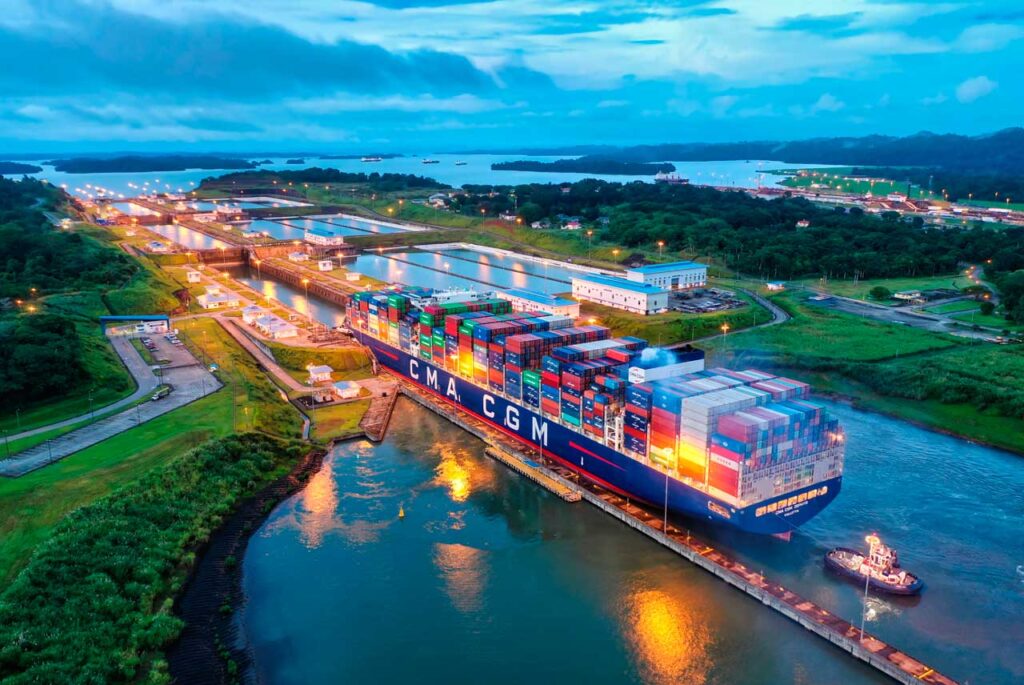
The Panama Canal is celebrating 112 years of operations, reaffirming its strategic role in global commerce while advancing a long-term vision centered on sustainability, competitiveness, and greater value for Panama. The interoceanic waterway, inaugurated on August 15, 1914 and expanded in 2016 with the Neopanamax locks, currently handles approximately 3% of global maritime trade.
Today, the Canal connects approximately 180 trade routes, 1,920 ports in 170 countries, and facilitates the movement of cargo valued at around USD 444 billion annually. These figures highlight the waterway’s continuing importance as one of the world’s most influential links in international shipping and global supply chains.
As part of its 2025–2035 Vision, the Panama Canal is seeking to evolve beyond its traditional role as a maritime transit route and become a world-class logistics, energy, and services platform. Strategic projects include the Río Indio Lake project, the planned Corozal container transshipment terminal on the Pacific side and Telfers terminal on the Atlantic, as well as an energy corridor featuring an approximately 76-kilometer pipeline designed to transport propane, butane, and ethane between terminals with access to both oceans. Expansion of the Canal’s Logistics Corridor is also expected to strengthen national connectivity and logistics capacity.
Operational performance has remained positive as demand for Canal services continues to grow. Between October 2025 and July 2026, the Canal recorded 10,623 deep-draft vessel transits, representing a 6.12% increase compared with the 10,010 transits registered during the same period of fiscal year 2025. Of the total, 2,990 were Neopanamax vessels and 7,633 were Panamax vessels, demonstrating the Canal’s capacity to respond to sustained maritime demand.
At the same time, climate variability and the potential strengthening of El Niño remain important challenges. The Canal has implemented water-saving measures at its locks since late 2025 and used relatively favorable conditions during the 2026 dry season to strengthen water reserves in Gatún and Alhajuela Lakes. Continuous monitoring of reservoir levels and climate conditions remains central to protecting water resources and maintaining reliable operations.
As part of this water-management strategy, the maximum authorized draft for vessels using the Neopanamax locks is scheduled to be adjusted to 48 feet (14.63 meters) beginning August 26, 2026, followed by a further adjustment to 47.5 feet (14.48 meters) starting September 3. The Canal said these measures are based on projected Gatún Lake levels and are intended to preserve operational sustainability while maintaining safe and dependable navigation.
After more than a century of operations, the Panama Canal is therefore looking beyond its historic role as an interoceanic passage. Through infrastructure expansion, logistics development, energy projects, responsible water management, and long-term strategic planning, the Canal aims to remain competitive and resilient while continuing to generate economic benefits for Panama and provide a vital service to global maritime trade.