

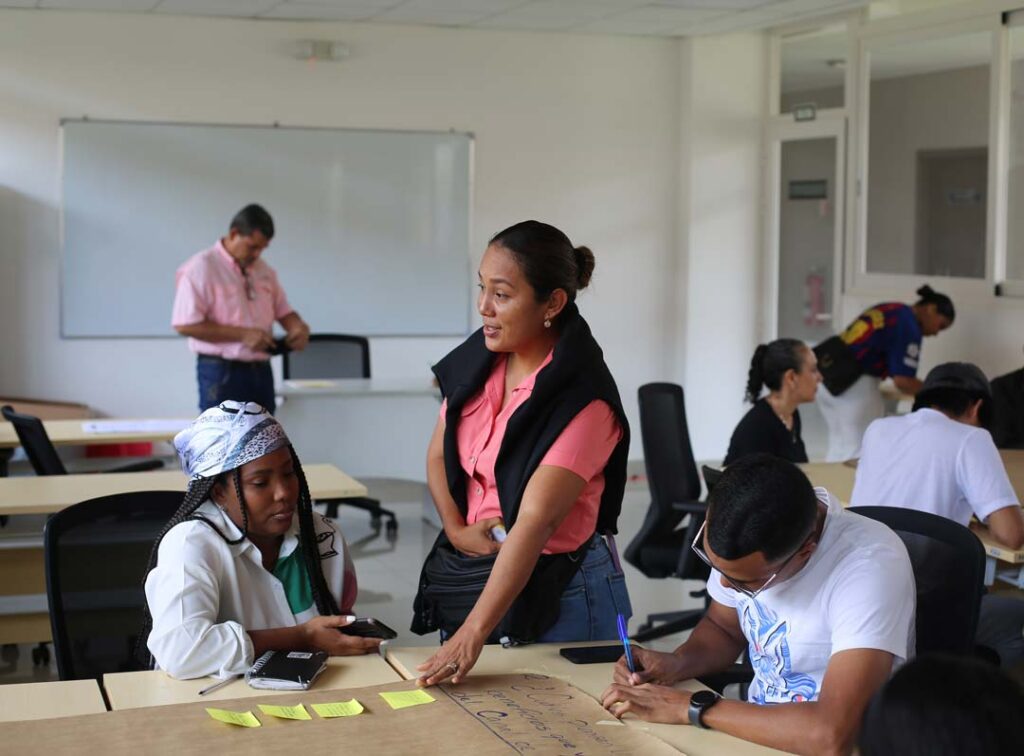
The Panama Canal has begun building a participatory, multisector social coalition as part of the development of strategic projects in the Atlantic and Pacific regions. According to the Panama Canal Authority, the initiative is intended to help shape a shared logistics vision that supports the Canal’s intermodal logistics strategy while strengthening collaborative governance, institutional legitimacy, and sustainable territorial development.
To carry out this process, the Canal hired the International Center for Sustainable Development (CIDES), an institution specialized in participatory methodologies and territorial planning. The effort is designed to bring together a broad and balanced group of stakeholders, including the Panama Canal, NGOs, public- and private-sector actors, academia, international organizations, and communities directly or indirectly linked to Canal activities.
The first engagement with community sectors began in Cristóbal, Colón province, where representatives of local associations and organizations took part in the initial discussions. The Canal said this approach is intended not only to reinforce legitimacy and social responsibility, but also to strengthen operational planning and the long-term sustainability of the Panama Canal Intermodal Hub.
The initiative is based on principles of participatory governance, understood as a model of public management that formally integrates the voices of citizens, social organizations, the private sector, and local actors into the planning, design, and implementation of public policies. According to the ACP, this framework aims to promote more representative, inclusive, and territorially responsive decision-making.
The coalition-building process has been structured in clearly defined phases. It begins with a diagnostic and mapping phase focused on identifying key stakeholders and building a comprehensive understanding of the territory and sectors linked to the Intermodal Logistics Hub. This stage will be followed by the preparation of a stakeholder matrix, the identification of thematic priorities through participatory processes, the creation of multisector logistics working groups, and eventually the formation of a Participatory Social Coalition Commission to oversee transparency and governance throughout the process.
A cross-cutting capacity-building phase is also included to strengthen informed and effective participation among all stakeholders. This component will cover training needs assessments, the design of activities with goals and indicators, systematic progress measurement, and technical reports with feedback. It will also include modules on conflict resolution, intercultural collaboration, and change management to help consolidate a strong social coalition and a shared logistics vision.
With this phased model, the Panama Canal reaffirmed its commitment to sustainability, participatory planning, and inclusive governance. The ACP also noted that it plans to invest more than B/. 8 billion in several strategic projects, which are expected to generate jobs for Panamanians and serve as a driver of national economic growth. The Canal added that increased revenues from these initiatives could allow it to transfer greater annual resources to the national government for social investment projects that benefit the country.