

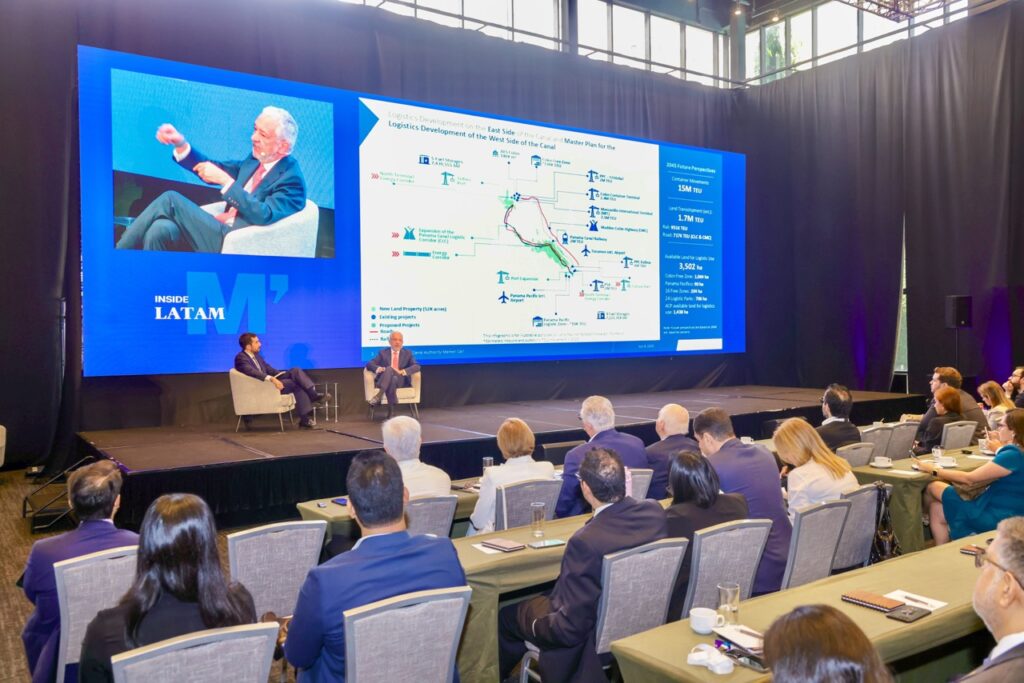
The Panama Canal took part in Inside LatAm: Panama 2025, a forum organized by Moody’s Investors Service that brought together public- and private-sector leaders to assess Panama’s economic outlook, as well as the risks and opportunities shaping the region. During the event, the Canal reaffirmed its strategic role as a key driver of national competitiveness and global trade.
Panama Canal Administrator Ricaurte Vásquez Morales participated as a panelist, emphasizing the continued relevance of the interoceanic waterway, through which between 5% and 6% of global maritime trade moves. He also highlighted progress in sustainability, energy diversification, and logistics development as part of the Canal’s broader vision for national and regional growth.
According to the Panama Canal Authority, the institution is advancing strategic initiatives such as energy and logistics corridors, new port terminals, and the strengthening of the water system. These projects are intended to generate long-term value, foster innovation, and reinforce Panama’s position as a vital hub for international trade and connectivity.
Vásquez stressed that the Panama Canal remains synonymous with reliability and neutrality, adding that one of its immediate priorities is to ensure long-term water sustainability so that the route can continue serving global commerce for generations to come. He also noted that Panama’s geographic location provides a unique strategic advantage for international trade, supported by the Neutrality Treaty, which guarantees open, safe, and dependable operations for the global maritime community.
As part of its sustainability agenda, the Canal highlighted the Río Indio Lake project, a key initiative aimed at increasing Panama’s water storage capacity. With an estimated investment of B/.1.6 billion, the project is expected to provide drinking water to more than half of the country’s population while enabling up to 15 additional daily transits during the dry season.
The Canal also underscored its long-term diversification strategy under its Master Plan 2035, which includes the development of an interoceanic gas pipeline as part of a broader energy corridor. The project is expected to strengthen supply security, diversify revenue sources, and generate significant employment, with more than 6,500 jobs annually during construction and nearly 9,600 jobs during operations. Over the next decade, the Canal plans to allocate approximately B/.8.5 billion to strategic projects aimed at boosting competitiveness and supporting sustainable development.