

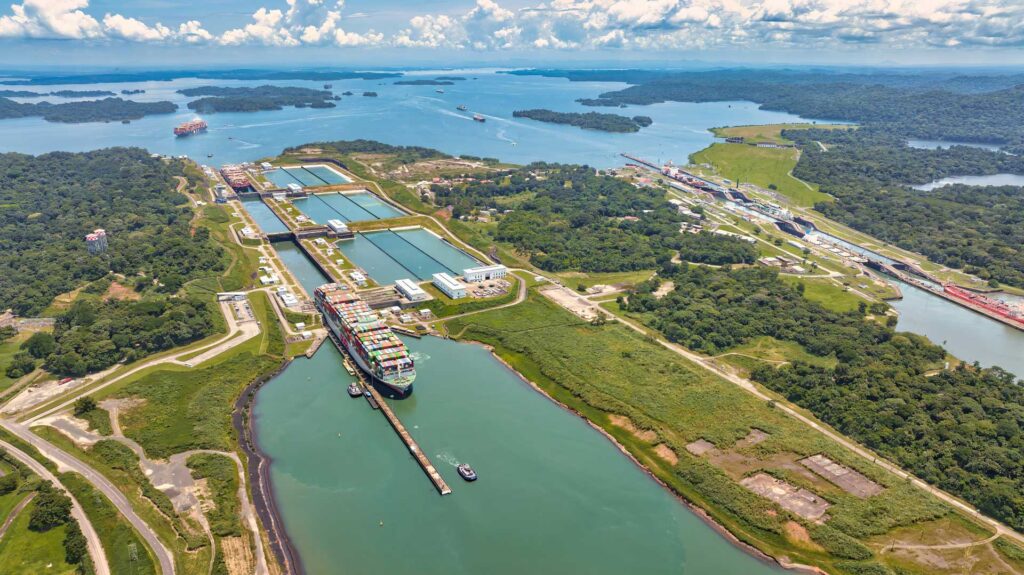
During his official visit to Japan, Panamanian President José Raúl Mulino, accompanied by Minister for Canal Affairs José Ramón Icaza and Panama Canal Administrator Ricaurte Vásquez Morales, announced the launch of the development process for a new gas pipeline that will form part of the Canal’s emerging energy corridor. The project represents the first major initiative within this new infrastructure platform, which is intended to strengthen Panama’s competitiveness and respond to growing demand in global energy markets.
According to the Panama Canal Authority, the Canal’s Board of Directors has already authorized the start of the concessionaire selection process. The procedure will include a prequalification stage, a period of interaction and dialogue with prequalified parties, and a final phase to select the concessionaire. The prequalification process is expected to begin this year, while the final selection stage is scheduled to conclude in the fourth quarter of 2026. The Canal said the process will be transparent and competitive, with the participation of world-class companies anticipated.
President Mulino stated that the pipeline is expected to become one of the largest investments in the Canal’s history and could generate significant economic benefits for Panama. According to the figures shared, the project could create an average of more than 6,500 jobs annually during construction and nearly 9,600 jobs during operations. It is also projected to generate around B/.160 million per year for the State during construction and more than B/.1.5 billion annually during operation, while contributing an estimated B/.590 million in annual added value during construction and approximately B/.2.7 billion during the operational phase.
The pipeline is part of the Panama Canal Authority’s broader revenue diversification strategy, aimed at expanding services, increasing cargo movement capacity without requiring additional water use, and reinforcing Panama’s role as a global trade hub. This strategy also includes the development of an intermodal logistics hub, featuring container transshipment terminals, storage areas, and a road corridor linking the Centennial Bridge to the Atlantic Bridge along the west bank of the Canal. Among the first projects within that logistics vision are the planned container transshipment ports at Corozal and Telfers, both located on the east bank of the Canal.
In his remarks in Tokyo, President Mulino described the initiative as a strategic move designed to keep Panama relevant in the global economy while promoting national development and preserving the long-term sustainability and competitiveness of the Panama Canal.