


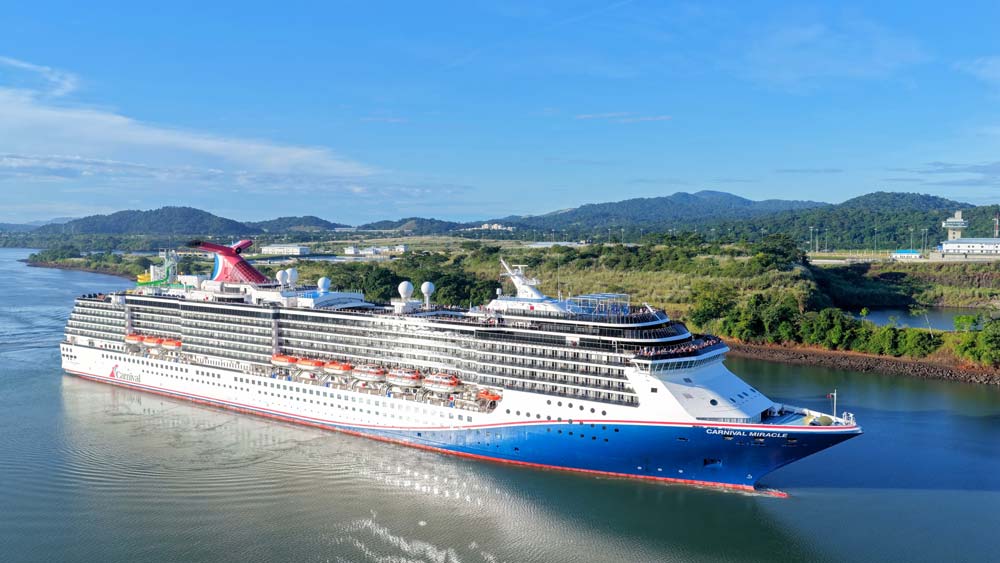
The Panama Canal has officially launched its 2026–2027 cruise season, with more than 220 cruise transits scheduled between October and May. The season opened with the transit of the Carnival Miracle, which began its northbound passage through the Miraflores Locks as part of a 16-day repositioning voyage from Seattle, Washington.
The strong schedule reinforces the Canal’s appeal as a strategic route for the international cruise industry, particularly for itineraries linking North America, the Caribbean, and the Pacific coast. According to the Panama Canal Authority, expectations for fiscal year 2027 remain positive as the cruise sector continues to expand and global passenger demand grows.
Global cruise passenger demand is projected to increase by 5.0% in 2027, while the worldwide cruise fleet is expected to grow by 16 vessels, reaching a total of approximately 490 ships. This outlook, combined with optimism among major cruise operators, supports expectations for continued growth in cruise traffic through the Panama Canal.
Major cruise companies including Norwegian Cruise Line, Carnival Cruise Line, and Royal Caribbean Cruises are expected to maintain both full and partial Canal transits during the season. Smaller vessels focused on specialized travel experiences will also use the route, including Le Bellot, Star Legend, National Geographic Quest, and Wind Star, adding further diversity to the Canal’s cruise traffic.
The 2026–2027 season will also bring several notable first-time visitors. L’Austral, Le Lapérouse, Seven Seas Prestige, Spirit of Adventure, and Explora III are all scheduled to complete their inaugural Panama Canal transits. In addition, the Canal expects 39 Neopanamax cruise transits, including three of the largest vessels in the program—Star Princess, Norwegian Bliss, and Norwegian Joy—each associated with a tonnage figure of 177,882 tons.
With a combination of large Neopanamax cruise ships and smaller vessels serving niche tourism markets, the Panama Canal enters the new season with a broad and diversified cruise offering. The projected traffic highlights the waterway’s continued importance not only to global maritime commerce, but also to the international tourism and cruise industries.