

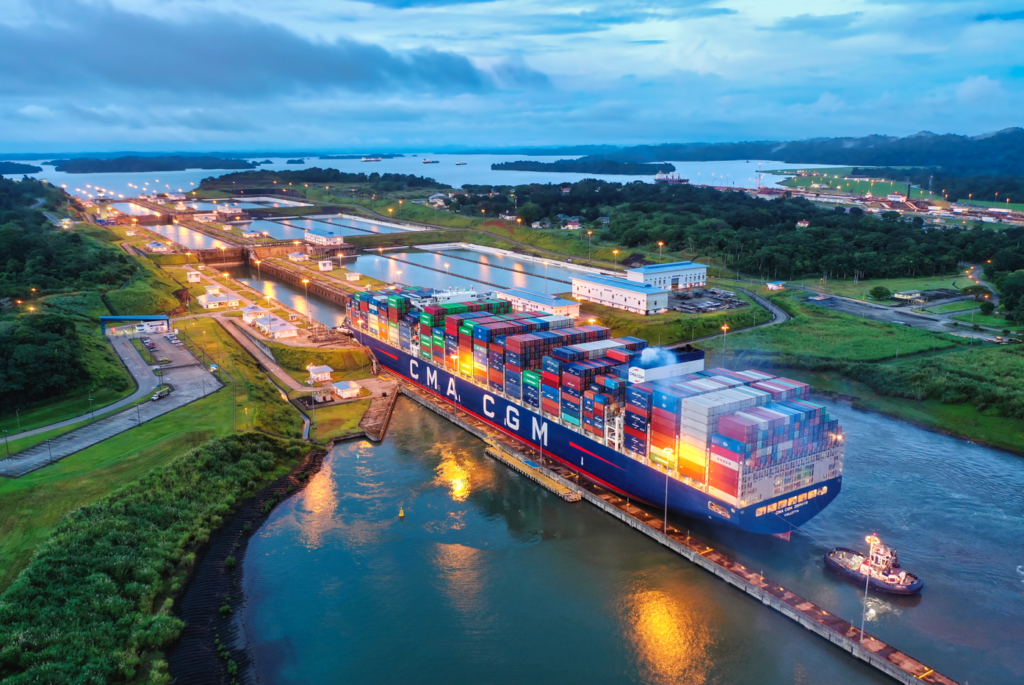
The Panama Canal has announced an increase in both the maximum authorized draft for Neopanamax vessels and the number of daily transit slots, following an improvement in hydrological conditions within the Canal watershed. The measures reflect updated projections for Gatún Lake and the positive impact of recent rainfall and water-conservation initiatives.
Beginning October 15, 2026, the Canal will increase the number of daily transits through the Neopanamax locks to 10, bringing the waterway’s total available capacity to 33 transit slots per day. The decision is based on current and projected Gatún Lake levels and represents an improvement in operating conditions compared with the restrictions introduced earlier in the year.
In addition, effective immediately and until further notice, the maximum authorized draft for vessels using the Neopanamax locks will increase to 49.0 feet (14.94 meters). The Canal attributed the adjustment to rainfall levels approaching the historical average across the watershed, together with the effectiveness of water-saving measures implemented at the locks.
Despite these improvements, the Panama Canal Authority emphasized that a water deficit remains in the Canal watershed. For that reason, the Transit Reservation System (Booking System) continues to be the only mechanism that guarantees a specific transit date. Vessels arriving without a confirmed reservation may still face indefinite delays, depending on demand and available capacity.
The Canal will continue closely monitoring rainfall patterns, water availability, and reservoir levels and will communicate any further operational adjustments as conditions permit. The latest measures demonstrate the Canal’s ability to adapt its operations as hydrological conditions evolve while maintaining a balance between service reliability and responsible water management.